







Above your bedroom ceiling, a quiet column of air shapes how your whole home handles winter. When attic ventilation works, that air stays cold and dry. However, a blocked or unbalanced attic can trap heat and moisture right under your shingles, inviting costly trouble. So before the first heavy snow, call Biltmore Exteriors for a seasonal check.
How Attic Ventilation Protects Your Home in Cold Weather
Think of your attic as the lungs of your roof. Cool outside air slips in through soffit vents, then rises beneath the roof deck. Then it exits at the ridge, carrying away the heat and dampness your household sends upward.
According to ENERGY STAR, that winter airflow keeps the attic cold. Here is why that matters so much in Northeast Ohio. A cold attic keeps snow from melting unevenly, which helps prevent ice dams along your gutters.
Even a small imbalance can throw the whole system off. For example, a roof with strong exhaust but weak intake may pull air from inside your home. That means paying to heat air that leaks straight out the roof.
How Healthy Airflow Works:
- Soffit vents pull fresh, cold air into the lowest part of the attic.
- Ridge vents release warm, damp air at the highest point of the roof.
- Insulation on the attic floor keeps household heat in your living space.
- Air sealing blocks warm, moist air from leaking up through ceiling gaps.
Ask Biltmore Exteriors to trace the airflow path through your attic this fall.
Ohio Fall Weather Sets the Stage for Winter Damage
Fall in Northeast Ohio turns fast. In fact, Akron-Canton has recorded measurable snow as early as the first week of October. Those swings make autumn the smartest season to check your attic.
Once leaves fall, they often pile into gutters and creep under soffit vents. Damp leaves, wasp nests, and layers of old paint can choke intake openings without anyone noticing. So the attic starts winter short of fresh air. Nobody wants that surprise.
Plus, fall is simply easier on crews and homeowners alike. Shingles stay flexible, roofs stay dry, and repairs wrap up well before freezing weather settles in for good. Also, crews can spot problems before snow buries them.
Fall Warning Signs to Watch:
- Leaves, nests, or debris packed against soffit vents.
- Insulation pushed tight against the eaves, blocking incoming air.
- A musty smell near the attic hatch on cool mornings.
- Shingles that look wavy or rippled along the roof deck.
Schedule a fall attic inspection with Biltmore Exteriors before the snow flies!
Poor Ventilation Feeds Ice Dams on Stark County Roofs
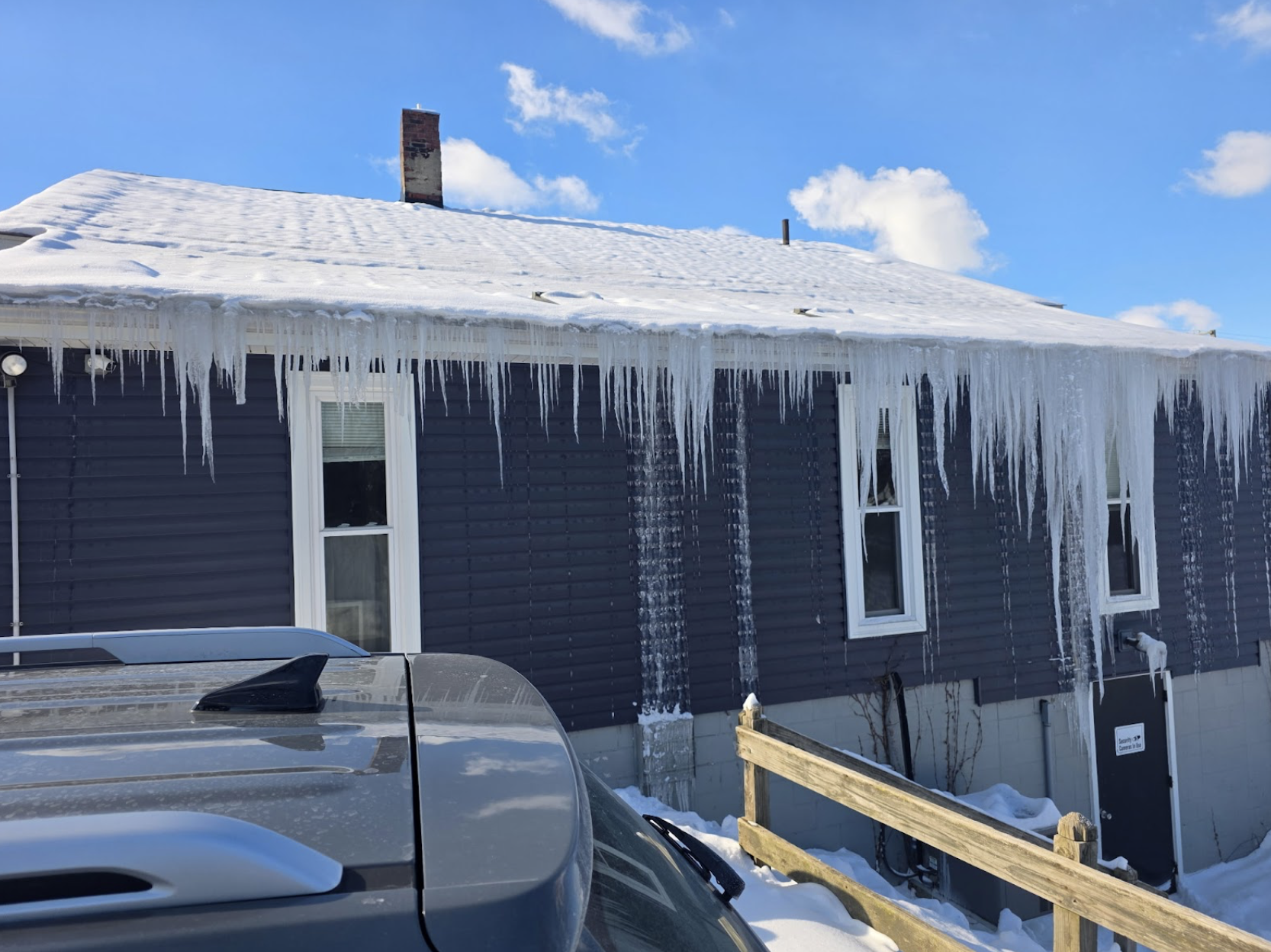
Ice dams start with heat in the wrong place. When warm attic air heats the roof deck, the snow above it melts. That meltwater slides down to the cold eaves and freezes into a stubborn ridge of ice. It happens across Stark County every winter.
Next, fresh meltwater pools behind that icy ridge. With nowhere to drain, it can back up under shingles and drip into ceilings, walls, and insulation. Of course, the damage often stays hidden until a stain appears indoors. By then, soaked drywall, stained paint, and matted insulation may all need replacing at once.
Still, ventilation works best as one part of a larger system. ENERGY STAR notes that air sealing and good insulation also help keep winter attics cold and dry. Because every home differs, a trained inspector should weigh all three together.
Common Ice Dam Triggers:
- Warm household air leaking through light fixtures and attic hatches.
- Thin or settled insulation across the attic floor.
- Blocked intake vents that leave the lower roof deck too warm.
- Exhaust vents that cannot release trapped heat at the ridge.
Call Biltmore Exteriors to find the true source of your ice dams.
Winter Moisture Hides Inside a Poorly Vented Attic
Every hot shower, simmering pot, and load of laundry quietly adds water vapor to your home. Some of it drifts upward through tiny gaps around light fixtures. Then it meets the cold underside of the roof deck and condenses into droplets.
Without steady airflow, those droplets can freeze into frost on nails and sheathing. As temperatures rise, the frost melts. Then it drips onto insulation, and over a few winters that cycle can invite mold and rot. Wet insulation also loses much of its ability to slow heat loss.
Of course, you rarely see any of this from the hallway below. Most attic moisture stays hidden until it stains a ceiling or warps the roof deck. When it does, the repair bill is rarely small.
Moisture Damage to Look For:
- Dark stains or mold spots on rafters and roof sheathing.
- Frost on roofing nails during the coldest mornings.
- Compressed, damp insulation that no longer traps heat well.
- Peeling paint or water marks on upper-floor ceilings.
Let Biltmore Exteriors check your attic for hidden moisture this season.
Balanced Attic Ventilation Is Professional Work
Building codes based on the International Residential Code set clear attic ventilation minimums. The base rule calls for one square foot of vent opening per 150 square feet of attic floor. Codes often allow half that amount with balanced high and low vents. Your roofer should know these numbers by heart.
Even so, more vents do not always mean better results. Mixing ridge vents with gable vents or roof fans can short-circuit the airflow and leave dead zones. Plus, a poorly placed attic fan can pull heated household air through ceiling leaks.
Ladders, icy shingles, and exposed nails also make DIY venting risky in cold weather. One wrong cut lets snow and rain straight in. Repairing that mistake in January is a costly lesson nobody wants to learn the hard way.
Why Experts Get It Right:
- Accurate intake and exhaust math based on your attic floor area.
- Baffles that keep insulation from smothering soffit vents.
- Exhaust vents matched so they never compete with each other.
- Safe roof work by crews trained for steep, slick surfaces.
Trust Biltmore Exteriors to size and balance your attic ventilation correctly.
Proper Venting Protects Your Roof Investment
A new roof is one of the largest checks a homeowner ever writes. Yet trapped heat and moisture can age shingles early. Several major shingle makers may limit warranty coverage for damage tied to poor ventilation. That fine print matters when you file a claim.
Here is the good news. When a roofing crew corrects ventilation during a replacement, the whole system works together! Plus, a cold, dry attic keeps winter comfort steadier in the rooms below. Often, upstairs bedrooms feel the difference first.
Picture two neighbors who replaced their roofs the same summer. Only one had the attic ventilation corrected, and only the other fought ice dams by February. Same street, same weather, very different winters.
Long-Term Payoffs:
- Shingles and decking that resist early heat and moisture wear.
- Fewer ice dams along gutters and eaves each winter.
- Drier insulation that holds its heat-blocking value.
- Fewer surprises if you ever file a shingle warranty claim.
Ask Biltmore Exteriors about ventilation upgrades during your next roof project.
Schedule Your Attic Ventilation Check With Biltmore Exteriors
Since 2003, Biltmore Exteriors has served homeowners across Canton, Stark County, and Summit County. Our A+ BBB rating reflects a simple habit of showing up on time and telling the truth. Now is the moment to catch attic problems, long before snow and ice hide them from view. Call Biltmore Exteriors today and head into winter with a dry, healthy attic!